Former Nigerian Head of State General Abdulsalami Abubakar has issued a stark warning that deepening insecurity across Africa's largest economy is fracturing national cohesion at a moment when coordinated recovery efforts are most needed. The former military leader, who governed Nigeria from 1998 to 1999 during the transition to civilian rule, delivered his remarks amid mounting fears that prolonged unrest is deterring investment and destabilising key economic sectors. Analysts tracking Nigerian markets say the timing of his intervention carries weight precisely because it comes from a figure whose credibility spans both military and political circles.
Divided Response to Security Crisis Fuels Concerns
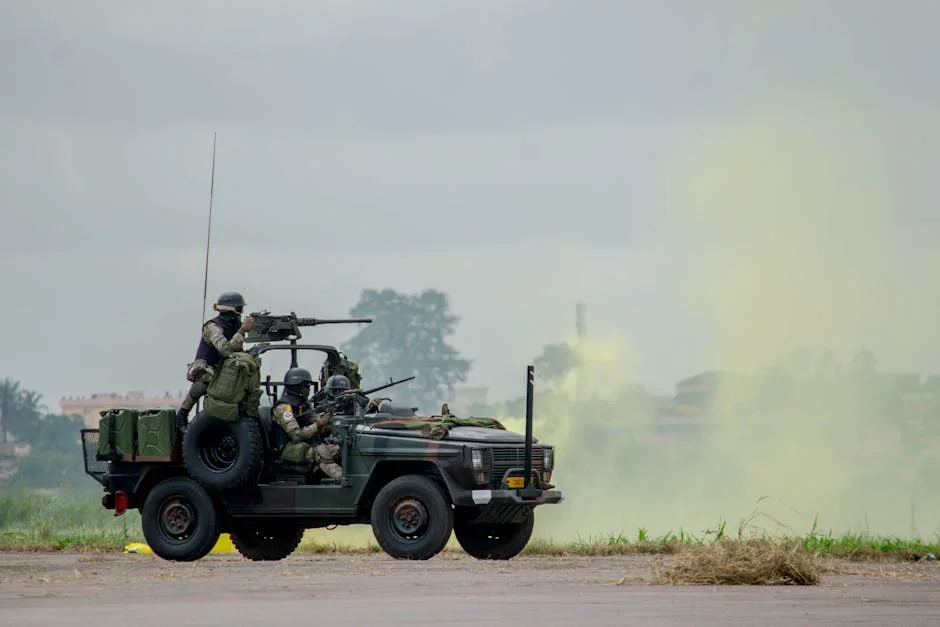
General Abdulsalami Abubakar's call for unity arrived as regional commanders in states including Borno, Katsina, and Niger have struggled to present a coordinated front against overlapping threats from armed groups, banditry, and secessionist movements. The former head of state pointedly noted that partisan responses to security challenges weaken the collective capacity to respond, a critique that carries particular resonance given Nigeria's bitterly divided political landscape ahead of upcoming state elections. Officials within the Ministry of Defence have acknowledged supply chain disruptions affecting military logistics, though they declined to specify figures during a briefing in Abuja last week.

The economic implications of that fragmentation are already visible. Foreign direct investment inflows to Nigeria contracted by an estimated 23 percent in the most recent quarter, according to data from the Nigerian Investment Promotion Commission. Several multinational companies operating in the Niger Delta region have cited security concerns when explaining delays to expansion projects, though corporate filings stopped short of naming specific sites. The naira has weakened against major currencies as investors weigh whether the government can stabilise the operating environment.
Business Confidence Erodes as Operational Costs Rise
Private sector representatives in Lagos say insurance premiums for assets in northern regions have climbed sharply over the past eighteen months, adding pressure to companies already managing currency volatility and input cost inflation. The Lagos Chamber of Commerce and Industry reported that its members cited security as the leading external concern in its latest quarterly survey, surpassing regulatory uncertainty for the first time in three years. That shift reflects how deeply the problem has penetrated commercial consciousness.
Multinationals with substantial Nigerian operations have begun restructuring their regional footprints. Some have shifted headquarters functions to Accra or Nairobi, citing the ability to manage West African operations from more stable bases while maintaining Nigerian market presence. Local suppliers, particularly those servicing the agricultural and extractive sectors in affected states, report that transport costs have doubled as convoy requirements and route changes add days to delivery schedules. The knock-on effects are visible in food price inflation, which the National Bureau of Statistics placed at 11.4 percent in its most recent release.
Investor Sentiment Hinges on Credible Response

Fund managers tracking Nigerian equities from Johannesburg and London have noted that the market has priced in a degree of security risk, but further deterioration could trigger sharper reassessment. The Nigerian Stock Exchange's all-share index has traded in a narrow range for the past quarter, a pattern that reflects caution rather than confidence. Emerging market analysts say sustained improvement requires visible progress on ground, not merely policy announcements from Abuja.
General Abdulsalami Abubakar's intervention matters, market watchers argue, because it signals that influential figures within Nigeria's establishment recognize the economic stakes. The former leader's experience shepherding Nigeria through its last major political transition lends weight to his warning that institutional coherence is a precondition for economic stability. Whether that message translates into concrete action depends on responses from current security leadership, whose coordination mechanisms remain opaque to outside observers.
What Comes Next for Nigerian Markets
The government's next quarterly security review is scheduled for presentation to the National Assembly in six weeks. That session will offer the first formal opportunity to assess whether coordinated responses to General Abdulsalami Abubakar's call are materialising or whether institutional divisions persist. Markets will be watching closely for any commitments on funding for regional commands, procurement timelines for equipment, and clarity on intelligence-sharing protocols between federal and state agencies.
For now, the burden of reassurance falls on visible action rather than statement. Companies with Nigerian operations have indicated they are monitoring the situation on a month-by-month basis, with contingency plans for further adjustment already drafted. The window for demonstrating credible momentum is narrowing, and General Abdulsalami Abubakar's warning has made that timeline explicit to audiences who may have preferred to avoid it.
See Also
- Durban's Fiscal Crisis Triggers Investor Alarm
- Nigeria's Opposition Parties Fracture as 2027 Election Cycle Begins
Emerging market analysts say sustained improvement requires visible progress on ground, not merely policy announcements from Abuja. The Nigerian Stock Exchange's all-share index has traded in a narrow range for the past quarter, a pattern that reflects caution rather than confidence.