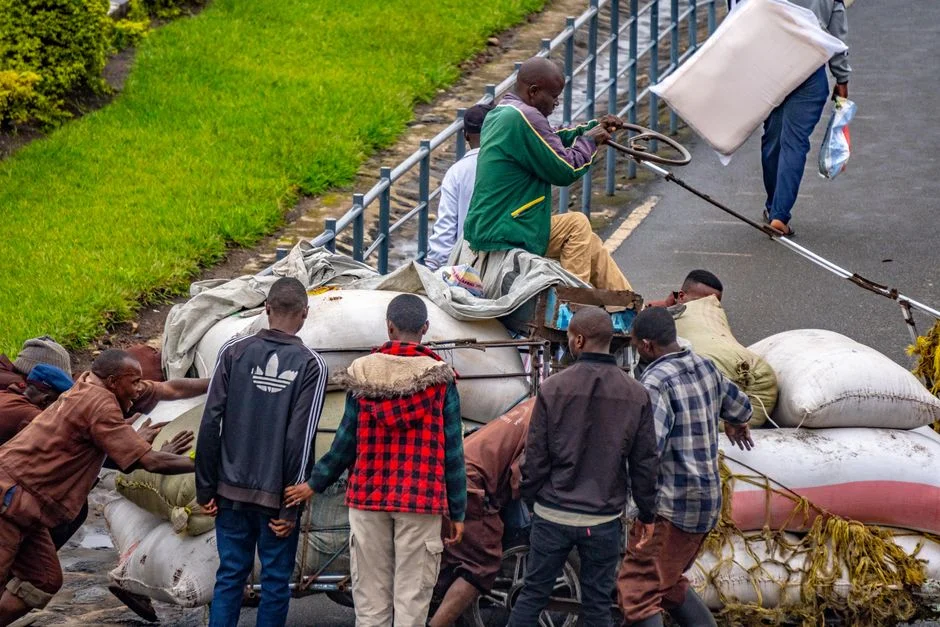
Harare is demanding that thousands of Zimbabweans living in South Africa come home. The call, backed by a coalition of civic groups and government-aligned organisations, comes as xenophobic violence and economic pressure have displaced thousands of Zimbabwean nationals from South African cities over the past two years.
Who is calling for repatriation and why now
The Zimbabwean diaspora ministry, led by Minister of Foreign Affairs Frederick Shava, confirmed that a working group had been established to coordinate voluntary return programmes. The ministry stated that facilities in Harare, Bulawayo, and Mutare are being prepared to absorb returning nationals, with initial capacity estimated at 5,000 people per month.

Shava told state broadcaster ZBC on Thursday that the government was not forcing anyone to leave South Africa. "This is about giving our people options," he said. "When conditions become hostile in a foreign land, they must know their country is ready to receive them." The statement marked a shift from previous rhetoric, which blamed Western sanctions for driving migration rather than addressing the pull factors keeping Zimbabweans abroad.
Several civil society organisations, including the Zimbabwe National Chamber of Commerce, have backed the initiative. They argue that returning citizens could fill labour gaps in agriculture and mining, two sectors that have struggled with workforce shortages since the COVID-19 pandemic.
How South Africa's economy would feel the impact
South Africa hosts an estimated 1.5 million Zimbabwean nationals, making them one of the largest foreign-born populations in the country. Many work in Gauteng's construction sector, the Western Cape's fruit farms, and KwaZulu-Natal's hospitality industry. Their departure would create immediate staffing gaps that local workers have historically been reluctant to fill.
Agricultural employers in the Cape Winelands have already reported difficulties recruiting South African workers for seasonal harvesting. Industry body Agri Western Cape warned last month that losing Zimbabwean seasonal labour could cost the sector up to R800 million in lost exports if produce goes unpicked.
The construction industry faces similar pressure. The Master Builders Association South Africa estimates that Zimbabwean nationals account for roughly 12 percent of semi-skilled construction workers in Gauteng. Executive director Mbuso Ntshongwana said contractors were already bracing for project delays if repatriation accelerates. "You cannot replace experienced bricklayers overnight," he told reporters in Johannesburg.
Remittance channels face disruption

Zimbabwe's economy depends heavily on remittances from citizens working abroad. The Reserve Bank of Zimbabwe reported that diaspora transfers totalled $4.1 billion in 2023, representing nearly a fifth of gross domestic product. South Africa accounts for the largest share, with an estimated $1.8 billion flowing into Harare and rural provinces annually.
Any large-scale return of workers would compress those inflows. Economic analysts at Imara Securities noted that reduced remittances could weaken consumer demand in Zimbabwe, potentially affecting South African businesses that export to the country. South Africa runs a trade surplus with Zimbabwe, selling everything from processed foods to vehicle parts to Harare's retail sector.
Currency pressures would also intensify. The Zimbabwe dollar has struggled against the US dollar since its 2019 reintroduction, and a fall in foreign exchange from remittances could accelerate that decline. Businesses with Zimbabwean operations that currently rely on local revenue to fund dollar-denominated costs would face fresh margin pressure.
Business sectors watching the situation most closely
Three industries are most exposed. Telecommunications companies, particularly Econet Wireless and its South African partner, depend on airtime sales to Zimbabwean workers sending money home. Transport operators running cross-border routes between Johannesburg and Harare would see passenger volumes decline. Supermarket chains with stores in both countries, such as Pick n Pay, would lose a segment of high-frequency buyers.
What South Africa stands to lose
The South African Revenue Service also benefits from Zimbabwean workers paying income tax and VAT. With formal employment rates among documented Zimbabwean migrants estimated at 68 percent, the fiscal contribution is not trivial. Treasury officials, speaking on background, said they had not modelled the impact of mass repatriation but acknowledged it would create pressure on social services if returning citizens overwhelmed local markets.
Diplomatic relations between Pretoria and Harare could cool if the repatriation effort is perceived as one-sided. South Africa's home affairs ministry has not formally responded to Harare's announcement, but insiders say officials are watching the language carefully. Any implication that Zimbabweans are being pushed out rather than choosing to return could prompt a political backlash that complicates bilateral trade agreements.
What comes next
The Zimbabwean working group is expected to present a repatriation timeline to cabinet by the end of February. Volunteers who sign up will receive a R5,000 settling-in grant and transport assistance to their home districts. The programme mirrors a smaller 2019 initiative that successfully resettled roughly 3,000 people, though critics note that the economic conditions driving migration remain largely unchanged.
South African businesses should monitor three signals: home affairs ministry statements on documentation processes, agricultural employer reports on harvest staffing, and Reserve Bank of Zimbabwe data on remittance flows through the first quarter. Any sustained drop in cross-border transfers would signal that the labour pool is thinning faster than expected. That data will arrive before any official South African employment statistics, giving firms time to adjust recruitment strategies.
See Also
- Ramaphosa Slams Xenophobia Claims to Calm African Investment Fears
- Russian Superyacht Defies Strait of Hormuz Blockade — Markets React