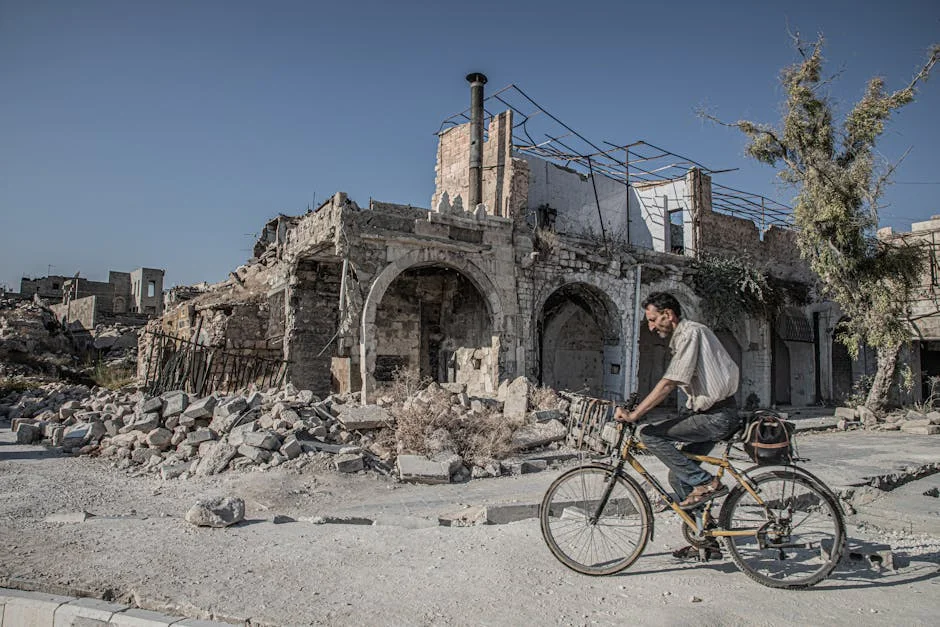
Israeli forces have intensified demolitions in northern Lebanon, with satellite imagery revealing the destruction of over 300 homes in the village of Zouk in March. The operation, led by the Israeli Defence Forces (IDF), has displaced thousands and raised concerns over regional stability. The Lebanese Ministry of Public Works confirmed the damage, warning of long-term economic repercussions for the area. The incident comes amid heightened tensions following a series of cross-border attacks.
Regional Security Crisis Sparks Market Volatility
The escalation in violence has triggered immediate market reactions in the Middle East. The Beirut Stock Exchange fell by 2.3% on Monday, reflecting investor concerns over potential disruptions to trade and investment. Analysts at Arab Capital Markets noted that the conflict has increased uncertainty for regional businesses, particularly those reliant on cross-border trade. The Lebanese lira has also weakened against the US dollar, with the exchange rate hitting 15,500 lira per dollar as of March 12.
The destruction of infrastructure in Zouk, a key agricultural hub, has disrupted local supply chains. Farmers in the region reported losses of up to 40% of their crops, according to the Lebanese Agricultural Association. This could lead to higher food prices across Lebanon, with the World Bank estimating that inflation could rise by 1.5 percentage points in the coming months. The impact on the local economy is expected to be significant, especially in a country already grappling with a severe financial crisis.
Investor Sentiment Dampened by Uncertainty
Investors are increasingly wary of the long-term economic implications of the conflict. The International Monetary Fund (IMF) has warned that prolonged instability could derail Lebanon’s fragile recovery efforts. With the country’s debt-to-GDP ratio already exceeding 170%, any further economic shocks could push it closer to default. The IMF has urged both Israel and Lebanon to de-escalate tensions to avoid a deeper crisis.
Global investors are also reassessing their exposure to the region. The London-based investment firm Schroders has downgraded its outlook for Middle Eastern equities, citing the risk of further conflict. “The situation in Lebanon is a wake-up call for investors,” said David Miller, a senior analyst at Schroders. “We’re seeing a shift in capital away from volatile regions and into more stable markets.”
Lebanon’s Government Faces Pressure to Act
The Lebanese government has called for an urgent international response to the situation. Prime Minister Najib Mikati addressed the United Nations Security Council on March 10, demanding an investigation into the Israeli actions. “This is not just a local issue — it’s a threat to regional peace and economic stability,” he said. The government has also requested aid from the Arab League to support displaced families and rebuild damaged infrastructure.
Local businesses, particularly in the north, are calling for immediate support. The Zouk Chamber of Commerce has launched a campaign to raise funds for reconstruction. “We cannot afford to wait for international help,” said Nadine Khoury, a local business owner. “Our livelihoods are at stake.” The government has pledged to allocate $50 million for emergency relief, but many fear it will not be enough to cover the full extent of the damage.
Impact on Regional Trade and Investment
The destruction in Zouk has also disrupted trade routes between Lebanon and Syria, a key supplier of essential goods. The Syrian government has warned that the situation could lead to a shortage of basic commodities in Lebanon. “We are already facing a severe shortage of fuel and food,” said a spokesperson for the Syrian Ministry of Trade. “This will only worsen if the conflict continues.”
Investors in the region are also looking at alternative routes for trade. The Jordanian government has announced plans to expand its border crossings with Lebanon to ease the flow of goods. “This is a strategic move to reduce reliance on the northern routes,” said Jordan’s Trade Minister, Samir al-Masri. “We are preparing for a possible increase in traffic.”
What to Watch Next
The coming weeks will be critical for the region’s economic outlook. The UN Security Council is set to hold an emergency session on March 20 to address the crisis, and the IMF is expected to release a new report on Lebanon’s economic situation by the end of the month. Investors and businesses should monitor these developments closely, as they could have far-reaching consequences for the region’s markets.