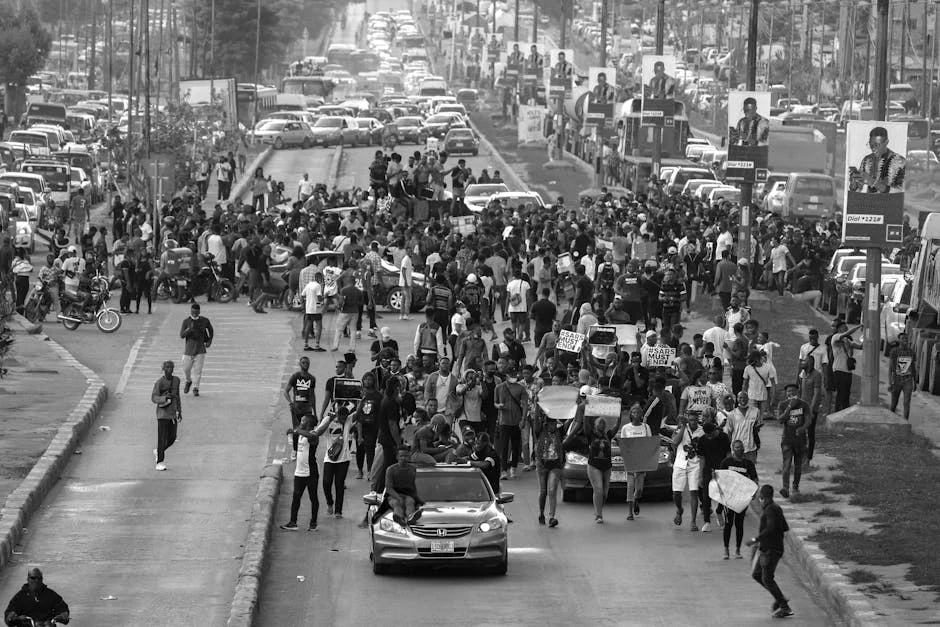
Nigeria has begun evacuating hundreds of its citizens from South Africa following a surge in anti-migrant violence, a move that threatens to damage Pretoria's standing among foreign investors and complicates an already fragile economic recovery.
The evacuation, coordinated through Nigeria's foreign affairs ministry, comes as businesses across Johannesburg and Durban report mounting concerns about the country's reputation as a stable destination for international capital. South African authorities confirmed they were working with diplomatic missions to ensure the safety of all foreign nationals.
Diplomatic Tensions Rise as Crisis Unfolds

The Nigerian government activated emergency repatriation procedures after violent incidents targeting foreign nationals escalated in recent weeks. Diplomatic sources in Abuja confirmed that chartered aircraft began ferrying citizens back to Nigeria, with the foreign affairs ministry describing the operation as a priority humanitarian effort.
South Africa's home affairs department issued a statement urging calm and promising increased police patrols in areas affected by unrest. The government in Pretoria has faced criticism from opposition parties for failing to contain outbreaks of violence that have occurred sporadically since 2019.
The diplomatic fallout extends beyond bilateral relations. Several African Union member states have called for urgent consultations on the treatment of migrants across the continent, raising questions about the enforcement of free movement protocols under the African Continental Free Trade Area agreement.
Business Confidence Takes a Hit
Corporate South Africa is watching the situation closely. Several multinational companies with significant operations in the country have begun reviewing their security protocols for expatriate staff, industry sources indicated. A survey by the South African Chamber of Commerce and Industry showed member companies expressing heightened concern about political stability in the final quarter of the year.
Tourism operators face an immediate challenge. Booking cancellations from Nigerian visitors have spiked since the violence began, dealing a blow to a sector still recovering from pandemic-era losses. The country's tourism board had targeted 10 million international arrivals this year, a goal that now appears increasingly optimistic.
Retail and property sectors in areas with large immigrant populations report nervousness among commercial tenants. Business owners say the uncertainty is adding pressure to an already difficult operating environment characterised by power shortages and logistics constraints.
Investor Sentiment and Market Reaction


The rand showed volatility in early trading following news of the evacuation, reflecting broader anxieties about South Africa's investment climate. Currency traders noted that while the initial dip was modest, the incident adds to a pattern of political risk that has kept some foreign portfolio managers underweight on South African assets.
The Johannesburg Stock Exchange has faced headwinds this year from global factors, but analysts say domestic stability concerns are increasingly factoring into investment decisions. Sovereign risk ratings from major agencies already reflect concerns about governance and infrastructure, and any deterioration in social cohesion could accelerate negative reassessments.
Foreign direct investment commitments to South Africa have been growing slowly after a decade of stagnation, but the recovery remains fragile. Investment promotion agency Trade and Investment South Africa had been actively courting Nigerian businesses looking to expand across the continent, a strategy now complicated by the current crisis.
Regional Economic Integration Under Scrutiny
The AfCFTA was designed to facilitate exactly the kind of cross-border movement that the current tensions have called into question. South Africa's ambitions to serve as a hub for continental trade depend on its ability to protect foreign workers and businesses, analysts argue.
Nigerian companies have invested in sectors ranging from retail to telecommunications in South Africa, and the current situation raises questions about whether such expansion will continue at the planned pace. Several Lagos-based firms with South African operations have issued internal guidance on staff safety, according to people familiar with the matter.
The incident also spotlights broader challenges around urban economics. Many of the areas affected by anti-migrant sentiment have high unemployment rates, creating competition for informal economic opportunities that can spill over into resentment. Economists say addressing these structural issues requires sustained investment in education, housing, and job creation.
Government Response and Next Steps
South Africa's president is expected to address the nation later this week, with officials indicating that a comprehensive response plan is being finalised. The government has committed to deploying additional law enforcement resources and establishing faster channels for reporting incidents against foreign nationals.
Nigeria's high commission in Pretoria has set up a dedicated hotline for citizens requiring assistance. The foreign affairs ministry in Abuja stated that anyone wishing to return would be accommodated, though the operation is expected to take several weeks to complete given the numbers involved.
International observers are monitoring whether the South African government can contain the situation before it further undermines economic confidence. The next few weeks will test whether diplomatic engagement and security measures can restore stability, or whether the damage to South Africa's international reputation will prove more lasting.
See Also
- Nigerian Discos Collect N196bn of N246bn Billed — N50bn Revenue Gap Exposed
- Huawei Enterprise South Africa Launches Prosperity Initiative — Targets 20% Growth
What is the latest news about nigeria triggers emergency evacuation from south africa investors brace for impact?
Why does this matter for infrastructure-cities?
What are the key facts about nigeria triggers emergency evacuation from south africa investors brace for impact?