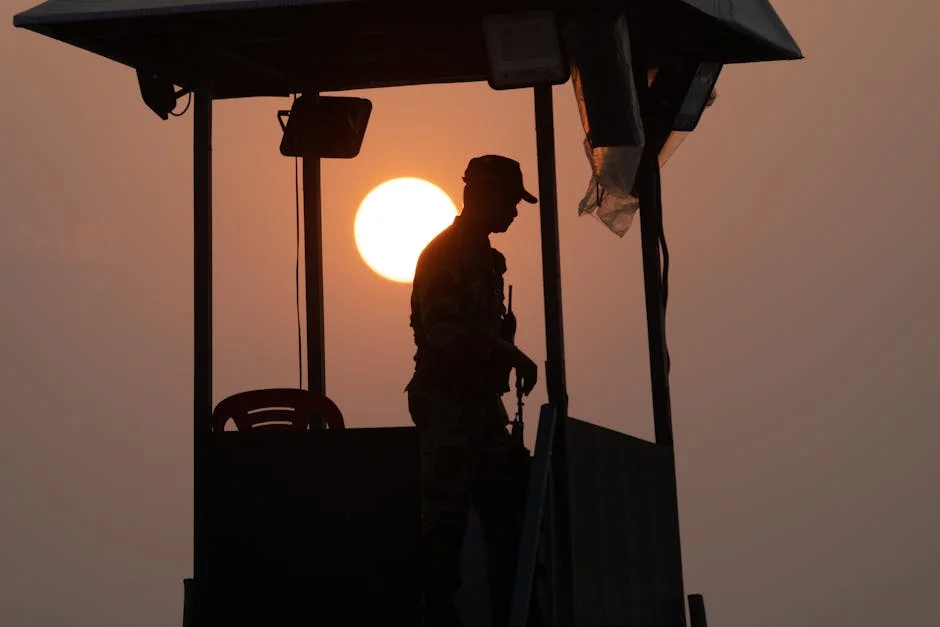
Thousands of Kenyan demonstrators flooded the streets of Mombasa on Monday after the US military refused to comply with a Nairobi High Court order demanding the suspension of construction on an Ebola quarantine facility at Mombasa's port district. The protests mark the sharpest escalation yet in a three-week standoff that has rattled investors and threatened to undermine a trade relationship worth roughly $4.2 billion annually.
The US Africa Command (AFRICOM) confirmed it had received the court ruling but insisted that the facility fell under bilateral defence agreements granting American personnel immunity from local jurisdiction. Kenyan officials rejected that interpretation, with Trade Cabinet Secretary Rebecca Miano warning that the dispute could delay preferential market access negotiations under the African Growth and Opportunity Act (AGOA).
Court Defiance Sparks Public Fury
The confrontation centres on a purpose-built biosecurity installation that the US military began erecting in late October without full environmental impact assessments, according to court documents filed by the Mombasa-based Kenya Legal Resources Foundation. Judge Lawrence Karatha issued an interlocutory injunction on November 12 ordering work to halt pending a full judicial review, a ruling the US embassy acknowledged receiving but has refused to enforce.
On Monday morning, Kenyan police deployed tear gas to disperse crowds near the construction site as tempers frayed over what opposition leader Raila Odinga called "a mockery of Kenyan sovereignty." The protests then spread to Nairobi's central business district, where traders voiced concerns that an Ebola-related facility could damage Kenya's reputation as a tourism and export hub.
Economic Stakes Skyrocket
The commercial implications extend far beyond the immediate diplomatic flare-up. Kenya exported approximately $1.8 billion in goods to the United States last year under AGOA preferences, making America Nairobi's second-largest trading partner after China. Any disruption to that relationship would hit Kenya's current account deficit at a particularly vulnerable moment, with the shilling already under pressure from rising import costs.
Investors holding Kenyan government bonds reacted nervously, with yields on 10-year Eurobonds climbing 23 basis points to 11.4 percent in early trading on Monday before paring gains. The Nairobi Securities Exchange's main index slipped 1.2 percent as market participants weighed the risk of broader trade sanctions.
AFRICOM Defends Its Position
AFRICOM's commander, General Michael Langley, issued a statement from Stuttgart headquarters asserting that the quarantine facility was essential for "regional health security coordination" and that its status was governed by the 2015 Status of Forces Agreement (SOFA) between Washington and Nairobi. The general's office declined to specify which provisions of that agreement the US believes supersedes Kenyan court orders.
Legal experts in Nairobi argue that SOFA does not grant immunity for construction activities that bypass domestic planning regulations. "This is not about soldiers on exercise," said Professor Makau Mutua of the University of Nairobi's law faculty. "This is a permanent infrastructure project that required Kenyan government approval at multiple stages. The Americans cannot simply invoke SOFA whenever they please."
Tourism and Logistics Sectors Brace for Impact
The uncertainty has sent jitters through Kenya's tourism industry, which contributes roughly 8 percent of GDP and employs more than 1.5 million people directly. Hotel bookings in Mombasa dropped 15 percent week-on-week following the protests, according to data from the Kenya Tourism Board, with some international conference organisers reportedly exploring contingency venues in Tanzania and Uganda.
The port of Mombasa, which handles 90 percent of Kenya's trade volumes and serves as a critical gateway for landlocked neighbours including Uganda, South Sudan, and the Democratic Republic of Congo, faces a more immediate operational challenge. Warehouse workers and customs agents have raised concerns about potential disruptions if protests intensify, with freight forwarding companies reporting delays in processing documentation for US-bound cargo.
Government Faces Dual Pressure
President William Ruto's administration finds itself squeezed between competing imperatives. On one hand, the US remains Kenya's most important security partner, providing intelligence and logistical support against Al-Shabaab militants operating from neighbouring Somalia. On the other hand, caving to foreign military pressure on domestic legal rulings risks alienating a domestic constituency already frustrated by economic hardship and rising living costs.
The Treasury has declined to comment publicly on contingency planning, but sources familiar with internal deliberations suggest officials are assessing whether to slow approvals for US-funded development projects pending a resolution. A senior official at the Ministry of Foreign Affairs, speaking on condition of anonymity, told Reuters that Nairobi was exploring whether the matter could be referred to the East African Court of Justice.
Washington's Broader Africa Strategy at Risk
The timing could hardly be worse for the Biden administration, which has sought to strengthen military and commercial ties with African nations as part of a broader strategy to counter Chinese and Russian influence on the continent. Kenya has been a cornerstone of that approach, hosting the inaugural US-Africa Summit on strategic investment just twelve months ago.
Senator James Risch, the ranking Republican on the Senate Foreign Relations Committee, urged the State Department to resolve the dispute quickly. "We cannot afford a breakdown in our partnership with Kenya over a facilities dispute," Risch wrote on social media platform X. "This needs to be sorted out at the diplomatic level before it spirals."
What Comes Next
Kenya's Attorney General is expected to file a formal enforcement motion by Friday, asking the court to impose daily penalties on the US military until compliance is achieved. Separately, the National Assembly's Defence and Foreign Relations committees have scheduled a joint session for next Wednesday to question senior military and trade officials.
For businesses and investors, the critical question is whether the two governments can negotiate a face-saving compromise before either side escalates further. The US has signalled willingness to engage through back-channel diplomacy, but Kenyan officials have insisted that any resolution must involve a public acknowledgement of the court's authority. Markets will be watching the outcome of next week's parliamentary hearing closely for signals about the trajectory of this standoff.
See Also
- Afreximbank Increases Caricom Financing Cap to $5 Billion — What This Means for Africa
- Gauteng Farmers Face Rising Costs as Foot and Mouth Disease Vaccination Plan Unfolds
Hotel bookings in Mombasa dropped 15 percent week-on-week following the protests, according to data from the Kenya Tourism Board, with some international conference organisers reportedly exploring contingency venues in Tanzania and Uganda.The port of Mombasa, which handles 90 percent of Kenya's trade volumes and serves as a critical gateway for landlocked neighbours including Uganda, South Sudan, and the Democratic Republic of Congo, faces a more immediate operational challenge. Warehouse workers and customs agents have raised concerns about potential disruptions if protests intensify, with freight forwarding companies reporting delays in processing documentation for US-bound cargo.Government Faces Dual PressurePresident William Ruto's administration finds itself squeezed between competing imperatives.