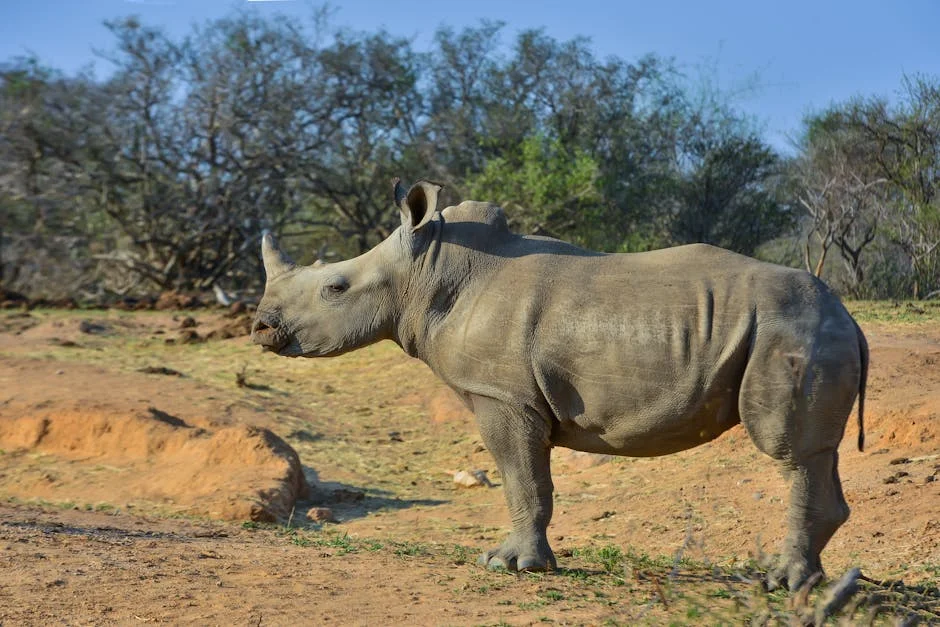
Five suspected rhino poachers have been shot dead in the KwaZulu-Natal province, marking a volatile escalation in the region’s ongoing battle to preserve its most valuable natural asset. The killings, which occurred in the heart of the Natal Midlands, send a stark signal to investors and tourism stakeholders that security risks remain acute in one of South Africa’s key economic engines. This latest incident forces a critical re-evaluation of the stability of the wildlife industry and its downstream effects on local business revenue and foreign direct investment.
Security Costs Surge for Private Estates
The death of five poachers in a single operation highlights the intensifying pressure on private game reserves and state-owned parks in KwaZulu-Natal. Reserve managers are increasingly forced to treat their land not just as a biological sanctuary, but as a front-line military zone. This shift dramatically alters the operational expenditure (OPEX) models for many private conservancies, which have long been the backbone of the regional tourism economy. Insurance premiums for property and liability in high-risk zones like Hluhluwe and St. Lucia are expected to climb as insurers reassess the threat level.
Business owners in the sector face a difficult trade-off between security spending and capital improvement. Funds that might otherwise be allocated to lodge renovations or marketing campaigns are now diverted to hire elite military-grade security firms and invest in thermal imaging technology. This capital drain reduces the immediate return on investment (ROI) for stakeholders who entered the market expecting steady growth. The financial burden is particularly heavy for smaller, family-run estates that lack the economies of scale enjoyed by larger conglomerates.
Impact on Small-Serve Conservancies
Smaller conservancies often struggle to absorb these rising costs without passing them on to the end consumer. As security budgets swell, the price per bed-night for tourists increases, potentially making KwaZulu-Natal slightly less competitive against destinations like Botswana or Tanzania. This pricing pressure could lead to a subtle shift in tourist demographics, favoring higher-spending, security-conscious travelers over budget-conscious backpackers. The economic ripple effect extends to local suppliers, who may see fluctuating demand as reserves tighten their procurement cycles.
Tourism Revenue Faces Direct Headwinds
The tourism sector in KwaZulu-Natal is highly sensitive to perceptions of safety. While the province attracts millions of visitors annually, news of violent confrontations between rangers and poachers can create a "risk premium" in the minds of international travelers. Investors monitoring the sector are closely watching hotel occupancy rates and average daily rates (ADR) in the weeks following high-profile incidents. A sustained narrative of danger can lead to last-minute cancellations, which are costly for the hospitality industry due to its high fixed-cost structure.
Foreign direct investment (FDI) in the region’s tourism infrastructure may also slow as investors demand higher risk-adjusted returns. Development projects, such as new eco-lodges or safari expansion, require long-term stability to justify the capital outlay. When security becomes unpredictable, the discount rate applied to future cash flows increases, thereby reducing the net present value (NPV) of potential investments. This dynamic can lead to a pipeline freeze, where promising projects are put on hold until the security situation stabilizes.
The local economy relies heavily on the multiplier effect of tourism spending. When tourists spend less or stay for shorter durations, the benefits trickle down to local retailers, transport operators, and service providers. A dip in tourist arrivals can therefore lead to reduced employment opportunities in the secondary and tertiary sectors. This creates a broader economic vulnerability for communities in the Natal region that are already grappling with structural unemployment and infrastructure challenges.
Market Reaction to Wildlife Asset Volatility

For investors, rhinos are not just animals; they are liquid assets with a fluctuating market value. The price of rhino horn has seen significant volatility, influenced by supply chain disruptions, demand shifts in Asia, and conservation policies. The death of five poachers suggests that the supply side is under intense pressure, which could theoretically drive up the scarcity value of the horn. However, this economic incentive also fuels the poaching frenzy, creating a vicious cycle that threatens the long-term viability of the asset class.
Financial analysts are closely monitoring the performance of listed safari companies and tourism-focused exchange-traded funds (ETFs) in the wake of such incidents. While individual stock movements may be driven by broader market trends, the underlying sentiment regarding the stability of the wildlife industry is crucial. Investors are looking for signs that conservation efforts are yielding tangible results in terms of herd growth and security improvements. Without clear positive indicators, capital may flow out of the sector toward more predictable industries.
The valuation of wildlife assets is also influenced by the effectiveness of government intervention. If the state is perceived as failing to secure the borders and internal routes, the private sector must bear the brunt of the cost. This dynamic can lead to a "tax" on private reserves, where they effectively subsidize state security failures. Investors are demanding greater transparency and accountability from both private operators and public institutions to ensure that their capital is being deployed efficiently.
Government Policy and Regulatory Pressure
The KwaZulu-Natal government faces mounting pressure to deliver a coherent strategy that balances conservation with economic stability. The recent killings have reignited debates over the role of the South African National Parks (SANParks) and the provincial Department of Economic Development, Tourism and Hospitality. Stakeholders are calling for a more integrated approach that combines military precision with community engagement and economic incentives. Failure to deliver on this front could result in policy paralysis, further deterring investment.
Regulatory frameworks governing the trade of rhino horn are also under scrutiny. Some economists argue for a more liberalized market approach to reduce the black-market premium, while others advocate for stricter controls to enhance scarcity value. The direction of policy will have profound implications for the profitability of private reserves. Investors are watching for signals from the provincial government regarding potential reforms to the quota system or the introduction of new tax incentives for conservation efforts.
The legal status of poached horn and the efficiency of the judicial process are also critical factors. If poachers are not convicted promptly, the deterrent effect is diminished, leading to higher security costs. The economic cost of a sluggish justice system is often overlooked but can be substantial. It includes the cost of prolonged legal battles, the depreciation of assets due to uncertainty, and the opportunity cost of capital tied up in litigation. Investors are looking for a streamlined legal framework that provides clarity and predictability.
Community Economic Linkages
The economic impact of rhino poaching extends beyond the immediate vicinity of the reserves. Local communities in KwaZulu-Natal are deeply interconnected with the tourism value chain. Jobs in hospitality, transport, and retail are often dependent on the steady flow of visitors attracted by the wildlife. When security incidents disrupt this flow, the local economy suffers. Unemployment rates may rise, leading to increased pressure on social grants and local municipal revenues. This creates a feedback loop where economic instability fuels further social tension and security challenges.
Community-based conservation models aim to capture a larger share of the tourism revenue for local populations, thereby creating a direct economic incentive to protect the rhinos. However, the effectiveness of these models is tested when security costs rise. If the cost of protection eats into the profit margins, the dividends paid to community trusts may shrink. This can lead to disillusionment among local stakeholders, who may then view the rhinos as a burden rather than an asset. Investors are increasingly looking at social impact metrics as part of their due diligence, recognizing that community buy-in is essential for long-term stability.
Local Business Resilience
Local businesses are adapting to the changing landscape by diversifying their revenue streams. Some are moving towards offering more high-value, low-volume experiences to offset the need for larger tourist numbers. Others are investing in digital marketing to reach niche markets that are less sensitive to security perceptions. These adaptive strategies demonstrate the resilience of the local economy, but they also require capital and innovation. Access to credit and financial services is therefore crucial for enabling these transitions. Investors who provide flexible financing solutions can play a key role in supporting this adaptation.
Investor Sentiment and Future Outlook
Despite the challenges, the long-term outlook for the KwaZulu-Natal tourism sector remains cautiously optimistic. The province possesses unique natural assets that are difficult to replicate elsewhere. However, realizing this potential requires sustained investment in security, infrastructure, and community development. Investors are looking for clear signals of progress in these areas before committing significant capital. The recent killings serve as a reminder that the road to stability is fraught with obstacles.
The key metric for investors will be the correlation between security spending and tourist arrivals. If increased investment in security leads to a tangible improvement in safety perceptions and a subsequent rise in visitor numbers, the sector will be viewed as a viable growth opportunity. Conversely, if costs rise without a corresponding increase in revenue, the sector may face a period of consolidation and potential contraction. Monitoring these trends will be essential for making informed investment decisions.
Regulatory clarity and consistent policy implementation are also critical for restoring investor confidence. The KwaZulu-Natal government must demonstrate a commitment to creating a stable and predictable business environment. This includes enforcing contracts, protecting property rights, and ensuring efficient dispute resolution. Without these foundational elements, even the most promising investment opportunities may struggle to attract capital. The market is watching closely for signs of decisive action.
What to Watch in the Coming Months
Stakeholders should monitor the quarterly reports of major safari companies for changes in security expenditure and tourist arrival figures. These data points will provide early indicators of the sector’s health and its response to the current security challenges. Investors should also pay attention to policy announcements from the KwaZulu-Natal provincial government regarding conservation funding and regulatory reforms. These developments will shape the operating environment for businesses in the region.
The upcoming tourist season will be a critical test of the region’s resilience. If occupancy rates remain strong despite the recent incidents, it will suggest that the market is robust and that security concerns are manageable. A significant dip in arrivals would signal a deeper problem that may require more aggressive intervention. Investors and businesses alike should prepare for potential volatility and maintain a flexible approach to capital allocation. The next six months will be pivotal in determining the trajectory of the KwaZulu-Natal tourism economy.
See Also
- El Salvador Releases 1,200 Prisoners — Sugey Amaya Steps In
- Alabama Halts Execution Over Trigger Dispute - Reveals Complex Legal Battles