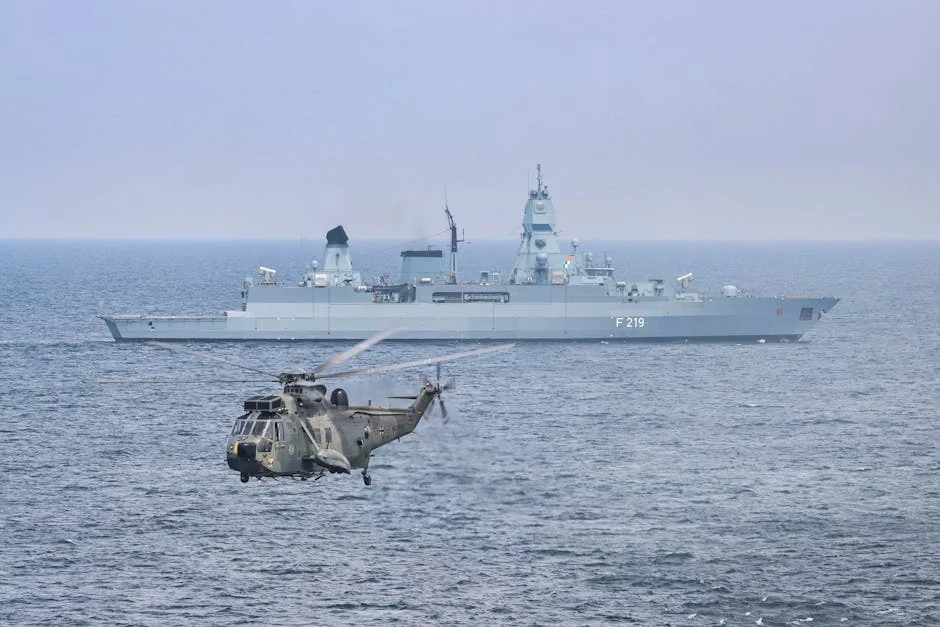
The United States has issued a sharp rebuke to Iran following a series of tense incidents in the Strait of Hormuz, a critical maritime chokepoint for global oil trade. The region, which sees 20% of the world’s oil passing through daily, has seen escalating naval confrontations and a spike in geopolitical uncertainty. The US State Department condemned Iran’s actions, warning of “serious consequences” for further destabilisation. This development has sent shockwaves through global markets, with oil prices surging by 5% within hours of the latest escalation.
Escalation in the Strait of Hormuz
The crisis began when an Iranian naval vessel allegedly intercepted a US cargo ship in the strait, leading to a tense standoff. The incident, which occurred on Monday, was followed by a second confrontation on Tuesday, when an Iranian speedboat approached a commercial vessel flying the flag of a European nation. The US Navy confirmed the events, stating that its forces were on high alert and prepared to respond to any threats. The strait, located between Iran and the Arabian Peninsula, is a strategic route for oil exports from the Middle East to global markets.

The US Department of Defense has deployed additional naval assets to the region, including the USS John C. Stennis aircraft carrier, to reinforce its presence. A spokesperson for the Pentagon said the move was “to ensure the free flow of commerce and protect US interests.” This military response has heightened fears of a broader conflict, with analysts warning that a direct clash could disrupt global energy supplies and trigger a sharp rise in oil prices.
Market Reactions and Investor Anxiety
Global financial markets reacted swiftly to the developments. The price of Brent crude oil, a key benchmark, rose to $112 per barrel, the highest level since 2014. Investors are increasingly worried about supply chain disruptions, with energy companies and traders scrambling to secure alternative routes for oil shipments. In South Africa, where fuel prices are already at a 10-year high, the situation has sparked fears of further inflationary pressure. The South African Reserve Bank has warned that any prolonged disruption in the region could worsen the country’s economic challenges.
Stock markets in the US and Europe also showed signs of strain. The S&P 500 fell by 1.2% as investors shifted funds to safer assets, such as gold and government bonds. In South Africa, the JSE All Share Index dropped 0.8% amid concerns over the potential impact on energy-dependent industries. “The Strait of Hormuz is a critical artery for global trade, and any disruption could have far-reaching economic consequences,” said Dr. Noma Mokoena, an economist at the University of Cape Town.
Business Implications and Supply Chain Concerns

Businesses across multiple sectors are bracing for the potential fallout. Shipping companies are re-evaluating their routes, with some opting to divert vessels through the Suez Canal instead of the Strait of Hormuz. This adds time and cost to global trade, particularly for companies reliant on just-in-time delivery systems. In South Africa, importers of fuel and machinery are already seeing increased costs, with some warning of possible price hikes for consumers.
“The uncertainty is causing a ripple effect,” said John van Zyl, CEO of a major South African logistics firm. “We are seeing delays and higher insurance premiums for vessels passing through the region. This is not just a regional issue — it’s a global one.” The potential for a broader conflict has also led to increased scrutiny of supply chains, with companies reassessing their reliance on Middle Eastern suppliers and exploring alternative sources.
Geopolitical Tensions and Regional Implications
The situation in the Strait of Hormuz is part of a broader pattern of rising tensions in the Middle East. Iran has been engaged in a series of confrontations with the US and its allies, including the recent shooting down of a US drone and the targeting of oil tankers. The US has consistently warned Iran against any actions that could destabilise the region, but diplomatic efforts have so far failed to de-escalate the situation. The International Maritime Organisation has called for a peaceful resolution, urging all parties to avoid provocative actions.
Regional powers, including Saudi Arabia and the UAE, have expressed concern over the situation. Both countries have urged the US and Iran to engage in dialogue to prevent further escalation. In a statement, the Saudi Ministry of Foreign Affairs called for “a calm and measured approach to avoid any unintended consequences.” The situation has also drawn the attention of China and Russia, both of which have significant economic interests in the region and have called for restraint.
What’s Next for Global Markets?
The coming days will be critical in determining the trajectory of the crisis. The US and Iran are expected to continue their posturing, with both sides preparing for potential military or diplomatic moves. Investors are closely watching the situation, with many analysts predicting further volatility in energy and stock markets. In South Africa, the government is monitoring the situation closely, with the Department of Energy preparing contingency plans to mitigate any potential fuel shortages.
As the situation unfolds, the global economy remains on high alert. The Strait of Hormuz is not just a regional issue — it is a linchpin of global trade, and any disruption could have far-reaching consequences. What happens next will determine whether this crisis leads to a prolonged economic downturn or a swift resolution that restores stability to the region.
See Also
- Abiy Ahmed Blames 'Enemies' for Election Propaganda as Investor Confidence Wanes
- Congress Moves 8 Odisha MLAs to Karnataka to Avoid Cross-Voting Chaos
What is the latest news about us slams iran over strait of hormuz tensions oil prices surge 5?
Why does this matter for politics-governance?
What are the key facts about us slams iran over strait of hormuz tensions oil prices surge 5?