The US has intensified its military blockade on Iranian ports, raising concerns over global oil supply stability. The move, announced by the US Department of Defense on Monday, targets key shipping lanes in the Strait of Hormuz, a critical artery for global energy trade. The action comes amid heightened tensions between Washington and Tehran, with the US citing security threats from Iranian-backed militias. The blockade has already triggered a sharp rise in oil prices, with Brent crude hitting $112 a barrel on Tuesday.
Strategic Moves and Immediate Market Reactions
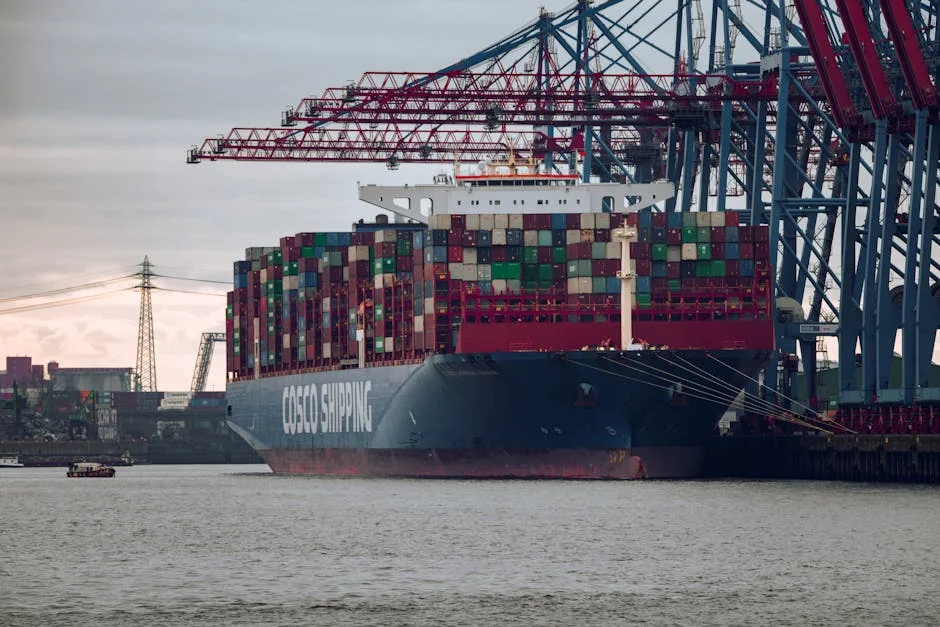
The US military’s blockade on Iranian ports marks a significant escalation in the ongoing geopolitical standoff. The operation, led by the US Navy’s 5th Fleet, involves increased patrols and the deployment of advanced surveillance technology. This has raised alarm among global traders, who fear disruptions to one of the world’s most vital shipping corridors. The Strait of Hormuz, which handles about 20% of global oil trade, is now under heightened scrutiny, with the US aiming to prevent any Iranian military activity in the region.
Global markets reacted swiftly. The S&P 500 fell 1.2% on Monday, while the FTSE 100 dropped 0.8% as investors braced for potential supply shocks. Oil prices surged, with WTI crude climbing to $108 a barrel, its highest level since 2014. The move has also impacted regional economies, with South Africa’s rand weakening by 1.5% against the US dollar, as investors seek safer assets.
Economic Implications for South Africa
The blockade has direct implications for South Africa’s energy sector, which relies heavily on imported oil and gas. The country’s state-owned energy firm, Eskom, has warned that rising global fuel prices could lead to higher electricity tariffs by the end of the year. The South African Reserve Bank (SARB) has also expressed concern, stating that inflation could rise to 7.5% in the coming months due to the surge in energy costs.
Businesses across the continent are feeling the strain. The South African Chamber of Commerce (SACC) has called on the government to fast-track alternative energy sources to mitigate the impact. "The uncertainty in the Middle East is putting pressure on our import-dependent economy," said SACC spokesperson Thandiwe Mbeki. "We need immediate policy responses to protect local industries."
Investor Sentiment and Market Volatility


Investor confidence has taken a hit, with global markets experiencing increased volatility. The Dow Jones Industrial Average fell 1.5% on Tuesday, while the NASDAQ dropped 2% as tech stocks faced pressure from rising energy costs. Analysts at JPMorgan warned that the situation could lead to a "stagflationary shock" if the blockade persists beyond a few weeks.
The South African stock market, represented by the JSE All Share Index, has also seen a decline, with the energy sector down 3.2% in two days. Portfolio managers are now shifting assets toward defensive stocks and commodities, such as gold and silver, which are seen as safe havens in times of geopolitical uncertainty.
Regional and Global Geopolitical Tensions
The US blockade has not only affected markets but also deepened regional tensions. The Iranian Ministry of Foreign Affairs has condemned the move, calling it a "provocative act" that threatens global stability. Meanwhile, regional allies of Iran, including Iraq and Syria, have urged the international community to intervene and de-escalate the situation.
The United Nations Security Council is expected to hold an emergency session next week to address the crisis. UN Secretary-General António Guterres has called for dialogue, stating that "military posturing only fuels further conflict." However, with the US and Iran locked in a cycle of retaliation, the path to de-escalation remains unclear.
What to Watch Next
The coming weeks will be critical for global markets and regional stability. The US has indicated that the blockade could last until the end of the year, depending on the situation in the Middle East. South Africa’s government is expected to announce new energy policies by the end of the month, which could include subsidies for local industries and increased investment in renewable energy.
Investors should monitor the S&P 500, Brent crude prices, and the rand-dollar exchange rate closely. Any further escalation in the Middle East could trigger a broader market sell-off, while a diplomatic resolution could bring relief to global markets. For now, the world watches and waits.
See Also
- NTK Unveils Candidates for Puducherry Assembly Elections — What It Means for South Africa
- Mysuru Board Launches Sparrow Conservation Drive on World Sparrow Day