Cape Town is no longer just South Africa's legislative capital or its most scenic city. The Mother City is positioning itself as a genuine economic force, drawing businesses and investment away from Johannesburg in a shift that could reshape the country's commercial landscape for generations.
The Numbers Behind Cape Town's Rise
Business registrations in the Western Cape grew by 18% last year, outpacing Gauteng for the first time in recorded history. Property values in Cape Town's central business district have climbed steadily, while office vacancy rates in Sandton—a Johannesburg commercial stronghold—have inched upward. These figures, reported by local business councils, paint a picture of capital quietly migrating south.
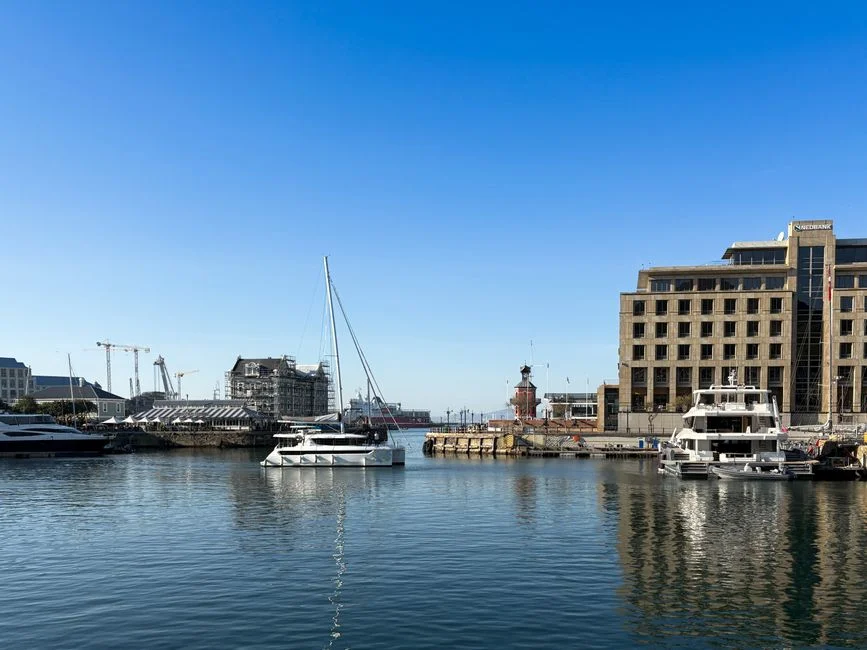
The Western Cape now contributes roughly 14% of South Africa's gross domestic product, a share that has crept upward over the past decade. This is not a sudden revolution. It is an erosion, slow and steady, of Johannesburg's unquestioned dominance.
Why Businesses Are Choosing Cape Town
Corporate relocations tell part of the story. Several multinational companies have expanded their African headquarters in Cape Town rather than the traditional financial hub. The city's government has actively courted investors, streamlining permit processes and offering incentives that Gauteng's provincial authorities have struggled to match.
Infrastructure plays a role too. Cape Town's port handles a growing share of the country's container traffic. Its international airport connects directly to major European and Asian markets. The city has invested heavily in renewable energy, reducing the frequency of power cuts that have plagued businesses in Johannesburg and surrounding areas.
Quality of Life as a Business Asset
Recruitment is another factor. Companies report that attracting senior talent to Cape Town is far easier than convincing professionals to relocate to Johannesburg. Surveys conducted by HR firms show that quality of life considerations—climate, safety perceptions, schooling options—now weigh heavily in location decisions for corporate functions that do not require proximity to the Johannesburg Stock Exchange or the mining houses clustered in Sandton.
The creative and technology sectors have been particularly drawn to Cape Town. Start-up incubators and co-working spaces have proliferated in suburbs like Woodstock and the Foreshore, creating an ecosystem that resembles global innovation hubs rather than traditional South African commercial centres.
What Johannesburg Stands to Lose


Johannesburg is not fading quietly. The city remains home to the Johannesburg Stock Exchange, the majority of South Africa's financial institutions, and the mining conglomerates that still anchor the national economy. Its airport handles far more cargo and passenger traffic than Cape Town's. For commodity traders and industrial firms, proximity to the minerals belt still matters.
But the trajectory matters. If the current pattern holds, Johannesburg risks losing the ancillary economic activity that follows headquarters—legal services, consulting, marketing, and the cluster of professional firms that feed off corporate clients. Gauteng's provincial government has acknowledged the competition and announced plans to improve the business environment, but concrete results remain elusive.
Investor Implications
The shift carries direct consequences for property investors, corporate real estate holders, and business owners weighing expansion locations. Office and industrial property in Cape Town's growth corridors is attracting capital that previously flowed exclusively to Gauteng. Some analysts have begun modelling scenarios in which Cape Town captures a larger share of new foreign direct investment, particularly from European and American firms seeking a stable base with strong governance indicators.
For investors in South African equities, the geographic redistribution matters. Companies headquartered in Johannesburg benefit from entrenched networks and regulatory familiarity. But firms that establish or expand operations in the Western Cape may find a more predictable operating environment, which can translate into stronger long-term returns.
The Road Ahead
No one is predicting Johannesburg's collapse. The city has defied doomsayers before. But the comfortable assumption that South Africa's economic future would automatically concentrate in Gauteng is no longer safe. Cape Town has made its case, and businesses are listening.
What happens next will depend on policy choices in both provinces. Cape Town's momentum could accelerate if the Western Cape government maintains its investment-friendly approach. Alternatively, Gauteng's infrastructure upgrades and economic development strategy could stem the outflow. The next 18 months will test which city can deliver on its promises faster.
Investors and business leaders should watch for data on new business registrations, property transaction volumes, and foreign direct investment flows into each province. Those numbers will tell the story before the headlines do.
See Also
- IFP Councillor Mbuso Mzwandile Mthimkhulu Murdered — Rand West City on Edge
- PSG Faces Arsenal in Champions League Final — Nigeria's Zamfara Sparks Economic Buzz
Some analysts have begun modelling scenarios in which Cape Town captures a larger share of new foreign direct investment, particularly from European and American firms seeking a stable base with strong governance indicators.For investors in South African equities, the geographic redistribution matters. Its airport handles far more cargo and passenger traffic than Cape Town's.