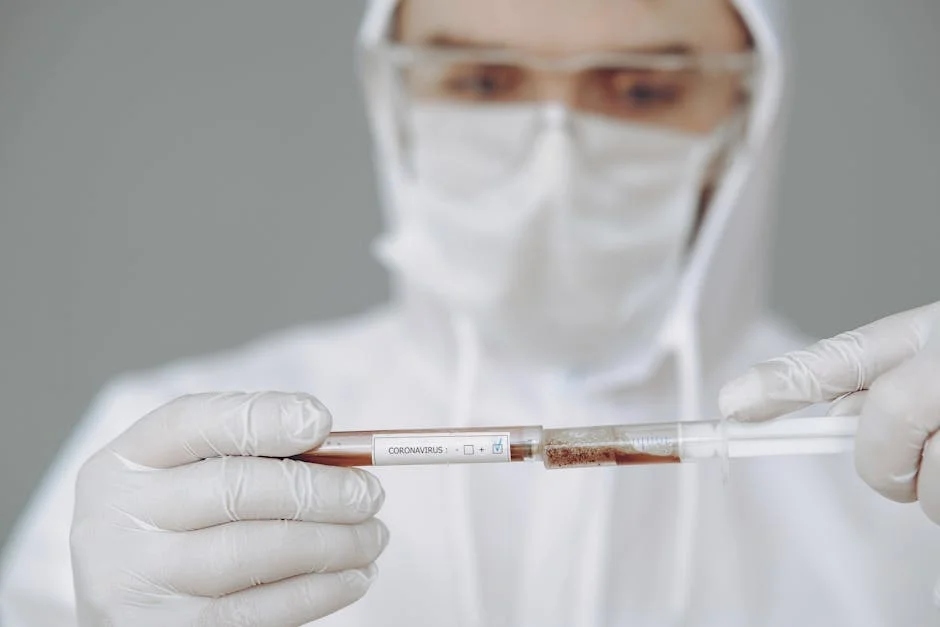
Nairobi's hospitality sector is bracing for a slowdown after the Kenyan government publicly opposed a US proposal to establish an Ebola screening and quarantine facility on its territory, industry executives and health officials confirmed Tuesday. The plan, first reported by the Associated Press last week, would have designated Kenya as a processing hub for US-bound passengers displaying symptoms consistent with viral hemorrhagic fevers. Within days of the reports surfacing, three major tour operators told Reuters cancellations from American visitors had spiked by an unspecified but "meaningful" percentage, according to the Kenya Tourism Board.
Government Draws Red Line on Quarantine Site
Health Cabinet Secretary Deborah Barasa addressed Parliament on Thursday, stating that Kenya "will not become the world's quarantine dumping ground." Her remarks drew rare bipartisan applause in a chamber often divided along ethnic and regional lines. The Ministry of Health subsequently released a formal note verbale to the US Embassy in Nairobi, requesting clarification on the proposal's scope and whether American officials had consulted Nairobi before drafting protocols that would have affected Kenyan sovereignty. A State Department spokesperson, speaking on condition of anonymity, told reporters the discussions were "preliminary" and that no site had been selected.

The controversy has exposed cracks in US-Kenya bilateral relations just as Nairobi positions itself as a gateway for American investment in the region. President William Ruto's administration has spent the past eighteen months courting US technology firms and defense contractors, offering tax incentives and streamlined visa processes. That delicate diplomatic balancing act now risks damage, according to analysts at the South African Institute of International Affairs.
Tourism Sector Counts the Cost
Kenya's tourism industry, which contributed approximately 1.24 trillion shillings—roughly $10.8 billion—to the national economy in 2023, has reacted with alarm. The Maasai Mara, Amboseli, and coastal resort regions depend heavily on American visitors, who comprise the second-largest international demographic after British tourists. Hilton's Nairobi headquarters issued a brief statement reassuring investors that no properties had been affected "at this stage," but shares in Nairobi-listed hotel chains dipped 3.2 percent on Friday before recovering partially.
Air Kenya Express and Kenya Airways face a dual pressure: reduced passenger volumes and the operational cost of enhanced screening protocols at Jomo Kenyatta International Airport. Aviation industry sources familiar with the matter said carriers had already begun lobbying the Kenya Civil Aviation Authority for emergency fee waivers should traffic decline persist through the December holiday season.
Regional Spillover Fears
Economists are watching how this dispute reverberates across East Africa. South Africa, which processes a far larger volume of US-bound cargo and passenger traffic through Johannesburg's O.R. Tambo International Airport, issued no public comment but dispatched a technical team to review its own quarantine protocols, according to a source close to the Department of Health in Pretoria. Tanzania, which competes directly with Kenya for safari and beach tourism, has already begun marketing itself to international tour operators as "Ebola-free and fully transparent," according to Tanzania Tourist Board Director Joyce Mwingira.
Health Infrastructure Remains Fragile

Kenya's own health system has limited capacity to absorb a surge in screening demands. The country's isolation units, built with World Bank funding after the 2014 West Africa Ebola outbreak, have a combined capacity of approximately 120 beds across four facilities. The Kenya Medical Research Institute, which would have played a central role in any quarantine operation, declined to comment on whether it had been approached by US officials. Dr. Andrew Mutua, director of emergency preparedness at KEMRI, told the Nairobi Standard that existing infrastructure was "already stretched" by ongoing cholera and measles outbreaks in the northern counties.
What Happens Next
Washington has not formally withdrawn the proposal, but diplomatic observers in Nairobi believe the window for implementation has effectively closed. A senior official at the African Union's health division, who requested anonymity due to sensitivity of the matter, told the Mail & Guardian that the Union's Ebola emergency response framework would need to be consulted before any member state could host a multinational quarantine facility. That process typically takes months.
Kenyan health officials will present a revised border screening protocol to Parliament's health committee by November 15. The proposal includes mandatory thermal screening for all passengers arriving from West and Central Africa, a measure that trade groups say could add 45 minutes to two hours to processing times at Jomo Kenyatta airport—enough to deter connecting passengers from choosing Nairobi as a transit hub.
The longer-term question is whether US-Kenya ties recover quickly enough to prevent investors from recalculating risk assessments. Ruto's government has bet heavily on American capital to fund its $10 billion infrastructure upgrade program. One misstep on public health diplomacy could complicate those ambitions for years.
See Also
- Portugal Activates Civil Protection Mechanism Amid Israel's Warnings — What It Means for Africa
- Kas Naidoo Reveals Secrets to Building Strong Relationships Through Conscious Choices - The Transforming Journey
Andrew Mutua, director of emergency preparedness at KEMRI, told the Nairobi Standard that existing infrastructure was "already stretched" by ongoing cholera and measles outbreaks in the northern counties. A senior official at the African Union's health division, who requested anonymity due to sensitivity of the matter, told the Mail & Guardian that the Union's Ebola emergency response framework would need to be consulted before any member state could host a multinational quarantine facility.