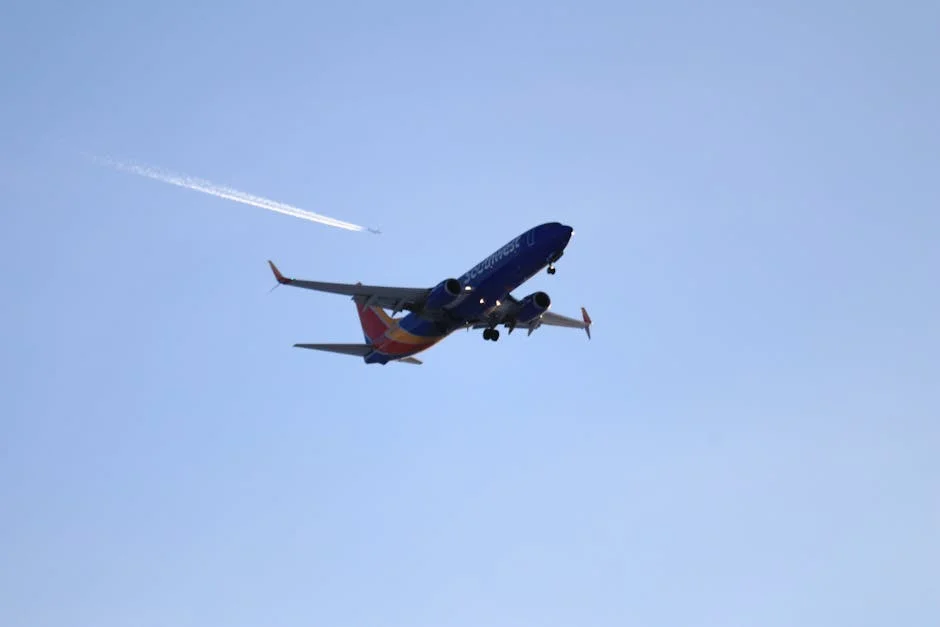
Southwest Airlines grounded a commercial jet for sixty minutes this week because a seventy-pound humanoid robot named Bebop stepped off its seatbelt. The incident occurred during a routine domestic flight, highlighting the growing friction between legacy aviation protocols and emerging robotics technology. Passengers watched in confusion as crew members managed the mechanical traveler, a scenario that airline executives never anticipated in their initial risk assessments.
Operational Disruption and Immediate Costs
Aviation is a business built on tight margins and precise timing. An hour-long delay on a Southwest Airlines flight is not merely an inconvenience for passengers; it is a direct hit to the airline's operational efficiency. The cost of a delay includes fuel burn while taxiing, crew overtime, and potential ripple effects on subsequent legs of the aircraft's journey. For a carrier like Southwest, which relies on a point-to-point hub model, a single delayed plane can disrupt the entire schedule for a morning rotation.
The presence of Bebop, a robot developed by Agility Robotics, introduces a new variable in cabin management. Unlike human passengers who respond to verbal cues, a seventy-pound machine requires specific handling procedures. If the robot is not properly secured, it could shift during turbulence, potentially injuring nearby passengers or damaging interior fixtures. This incident forces airlines to reconsider their liability insurance policies. Current policies may not adequately cover damage caused by autonomous entities that are neither fully mechanical cargo nor fully human passengers.
The Business Case for Robotic Travelers
Why would a company send a robot on a commercial flight? The answer lies in the logistics of testing and deployment. Companies like Agility Robotics are testing Bebop in real-world environments to refine its navigation and social interaction capabilities. Sending the robot to a conference or a new office location via air travel is a cost-effective way to gather data on how the machine handles vibrations, noise, and spatial constraints. This strategy reduces the need for expensive trucking or specialized cargo flights for smaller robotic units.
Market Implications for Robotics Firms
For investors watching the robotics sector, this event signals that the technology is moving out of the lab and into the mainstream. A successful flight, even with a delay, proves that humanoid robots can withstand the rigors of air travel. This validation could boost confidence in companies like Agility Robotics, Boston Dynamics, and Tesla, all of which are betting on humanoid labor. If robots can travel easily, they can be deployed globally, opening up new markets for robotic services in healthcare, logistics, and hospitality.
However, the delay also exposes a vulnerability. If every robot traveler causes an hour-long delay, airlines might impose strict surcharges or even ban unaccompanied robots from economy class. This could increase the cost of deploying robotic workforces, potentially slowing down adoption rates. Investors should watch for new revenue streams for robotics firms that offer "airline-ready" certification for their machines, a service that could become standard in the industry.
Aviation Industry Response and Regulatory Gaps
Southwest Airlines was not the first carrier to face a robotic passenger, but it is one of the most publicized cases. The Federal Aviation Administration (FAA) has yet to issue specific guidelines for unaccompanied humanoid robots on commercial flights. Current regulations focus on human passengers and standard cargo, leaving a gray area for entities that sit in between. This regulatory lag creates uncertainty for airlines, which must make quick decisions in the absence of clear rules.
Airlines may need to develop new standard operating procedures for robotic passengers. These procedures could include specific seat assignments, such as placing robots in bulkhead seats with more legroom, or requiring a human attendant to monitor the robot during takeoff and landing. The development of these protocols will require collaboration between airline operators, robotics manufacturers, and regulatory bodies. The cost of this adaptation will likely be passed on to consumers in the form of slightly higher ticket prices or new ancillary fees.
Investor Perspective on Aviation Stocks
For investors in the aviation sector, this incident is a microcosm of the broader challenges facing the industry. Airlines are already grappling with inflation, labor shortages, and fluctuating fuel prices. The addition of robotic passengers introduces a new layer of operational complexity. While the immediate financial impact of a single delayed flight is minimal, the cumulative effect of frequent robotic travelers could be significant. Airlines that fail to adapt to this new reality may find themselves at a competitive disadvantage.
Conversely, airlines that proactively embrace robotic travelers could gain a first-mover advantage. By offering tailored services for robotic cargo and passengers, airlines could capture a share of the growing logistics market. This could involve partnering with robotics firms to create dedicated cargo holds or offering premium seating options for high-value robotic units. Such innovations could open up new revenue streams, helping to offset the costs of traditional passenger travel.
Broader Economic Consequences
The integration of robots into the aviation ecosystem has broader economic implications. If robots become common travelers, it could change the dynamics of business travel. Companies might send robots to meetings, reducing the need for human executives to fly. This could lead to a decline in business class demand, as robots may not require the same level of comfort and service as human passengers. Airlines would need to adjust their cabin configurations to accommodate this shift, potentially converting business class seats into additional economy or cargo space.
Furthermore, the presence of robots on flights could influence consumer behavior. Some passengers may welcome the novelty of sharing a flight with a humanoid robot, while others may find the experience unsettling. Airline marketing teams will need to manage these perceptions, potentially using the robotic passenger as a selling point for tech-savvy travelers. This could lead to new branding opportunities, with airlines positioning themselves as forward-thinking and innovative.
What to Watch Next in the Aviation-Robotics Intersection
The incident involving Bebop on Southwest Airlines is likely to be a precursor to more frequent encounters between robots and commercial aviation. Investors and industry observers should monitor several key developments in the coming months. First, watch for regulatory updates from the FAA, which may issue new guidelines for robotic passengers in response to this event. Second, track the financial performance of robotics firms, as successful deployment strategies could drive up stock prices. Third, observe how airlines adjust their pricing and service models to accommodate robotic travelers.
The next major milestone will likely be the introduction of dedicated robotic seating or cargo options on major carriers. This could happen within the next two to three years, as airlines seek to optimize their cabin layouts. Investors should also keep an eye on insurance markets, as new policies specifically designed for robotic travelers could emerge. The aviation industry is on the cusp of a technological shift, and those who adapt quickly will be best positioned to capitalize on the opportunities presented by the rise of the robotic passenger.
See Also
- Eskom Forces Joburg into Darkness as Debt Crisis Deepens
- Watkins Scores Crucial Goal as Aston Villa Triumph Over Lille in Europa League
What is the latest news about southwest airlines halts flight for an hour because of robot bebop?
Why does this matter for environment-nature?
What are the key facts about southwest airlines halts flight for an hour because of robot bebop?