Defense Secretary Pete Hegseth has warned that the U.S. is prepared to resume combat operations against Iran if diplomatic talks fail, escalating tensions in the Middle East and sending ripples across global markets. The statement comes amid rising concerns over regional stability and the potential for a new conflict that could disrupt oil supplies and affect trade routes. South African investors and businesses are closely monitoring the situation as it could influence commodity prices and economic outlooks.
U.S. Readies for Escalation, Pentagon Signals Combat Intent
Hegseth’s remarks during a press briefing on Tuesday marked a shift in U.S. rhetoric, as the administration appears to be preparing for a more aggressive stance against Iran. The defense secretary stated, “If negotiations break down, the U.S. military is fully prepared to respond with force.” This follows months of stalled talks over Iran’s nuclear program and its support for proxy groups in the region. The Pentagon has not yet confirmed specific military plans, but the message is clear: the U.S. is not backing down.

The statement comes as U.S. forces remain stationed in the Middle East, with a significant presence in Saudi Arabia and the Gulf. Analysts say the military readiness could be a deterrent, but also a signal that the administration is unwilling to let tensions simmer indefinitely. A recent report by the U.S. Institute for Peace noted that the likelihood of a direct U.S.-Iran confrontation has risen to 30% — a sharp increase from previous estimates.
Market Reactions: Oil Prices Surge, Global Investors Watch Closely
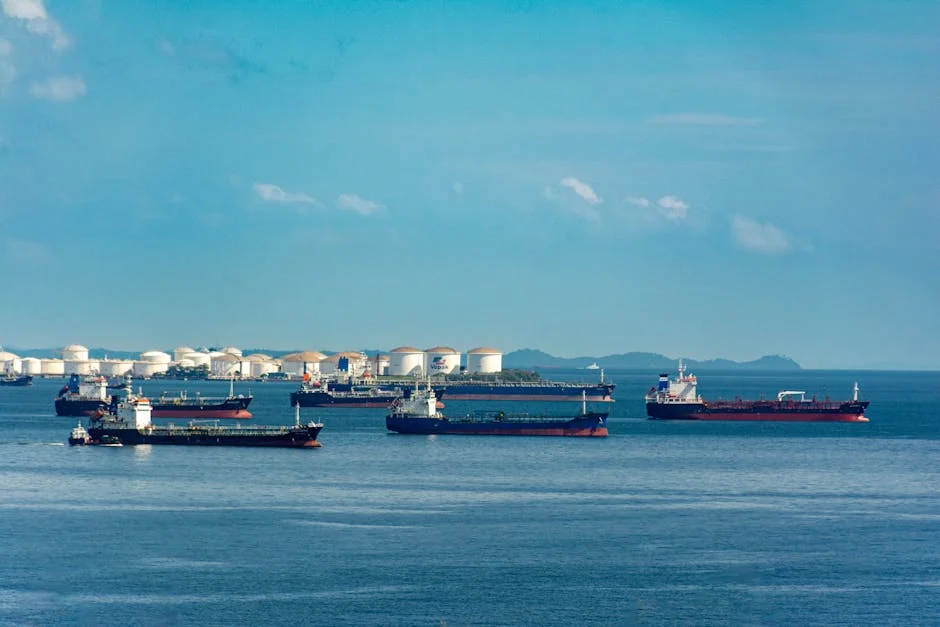
Global markets reacted swiftly to Hegseth’s comments, with Brent crude oil prices rising by 2.5% in early trading. The increase reflects fears of supply disruptions, as the Strait of Hormuz — a critical shipping lane for 20% of global oil trade — remains a flashpoint in the region. South African energy companies, which rely on imported oil, are already feeling the pressure. The Johannesburg Stock Exchange saw a 1.2% drop in energy sector shares as investors reassessed risk.
South African investors are particularly concerned about the potential for a broader regional conflict. The rand weakened against the U.S. dollar, falling to 18.30 per dollar, as risk-off sentiment spread. “This is a volatile situation, and any escalation could have cascading effects on global markets,” said Nomvula Nkosi, an economist at the University of Cape Town. “South Africa’s exports, especially to the Middle East, could be impacted if trade routes are disrupted.”
Business Implications: Supply Chains and Export Risks

For South African businesses, the potential for renewed conflict in the Middle East poses significant risks. Many companies rely on stable supply chains, and any disruption in the region could lead to higher costs and delays. The mining sector, which exports significant volumes of platinum and gold, is particularly vulnerable. A report by the South African Chamber of Commerce and Industry warned that a prolonged conflict could push up global commodity prices by as much as 5% in the coming months.
Business leaders are also concerned about the impact on trade with Middle Eastern countries. South Africa’s exports to the region have grown by 12% in the past year, according to the Department of Trade, Industry, and Competition. Any instability in the region could threaten this growth. “We’re closely monitoring the situation,” said Sipho Dlamini, CEO of a major South African logistics firm. “If the situation escalates, we may have to re-evaluate our supply chain strategies.”
Investment Perspective: A Risk-Off Environment Gains Momentum
Investors are increasingly adopting a risk-off approach, with a shift towards safer assets such as U.S. Treasuries and gold. The yield on the 10-year U.S. Treasury note fell to 4.1%, reflecting heightened uncertainty. South African investors are also looking to diversify their portfolios, with a growing interest in gold and foreign currency assets. “This is a classic case of geopolitical risk spilling over into financial markets,” said Thandiwe Mbeki, a portfolio manager at a leading South African asset management firm.
The South African Reserve Bank has not yet issued a formal statement on the situation, but officials have indicated they are monitoring the developments closely. “We are prepared for any potential shocks to the economy,” said a spokesperson for the bank. “Our priority is to maintain financial stability and protect the interests of South African savers and businesses.”
What to Watch: Key Dates and Next Steps
The next major test of diplomatic efforts will come in early April, when U.S. and Iranian officials are expected to meet in Baghdad for renewed negotiations. If these talks fail, the U.S. could take further military actions, including increased drone strikes or naval deployments. South Africa’s economic outlook will depend heavily on the outcome of these discussions and the stability of global markets.
For now, investors and businesses are advised to remain cautious. The situation is evolving rapidly, and any further escalation could have lasting consequences. As Hegseth’s warning makes clear, the risk of conflict is no longer a distant possibility but a near-term concern that demands close attention.
See Also
- Nigeria Police Vows to Protect South Africans — Business Leaders Fear Trade Fallout
- Tinubu Pushes Nigeria Reforms to Attract Global Capital
What is the latest news about hegseth warns iran conflict looms as us readies combat response?
Why does this matter for politics-governance?
What are the key facts about hegseth warns iran conflict looms as us readies combat response?