Few bilateral relationships in today's geopolitical landscape are as counterintuitive, as historically layered, and as practically significant as the one between South Africa and Ukraine. On the surface, the two countries seem to have little in common: one is a southern African nation still navigating the long aftermath of apartheid and defining its place in a multipolar world; the other is an Eastern European state fighting for its territorial integrity and national survival. Yet dig beneath the headlines and a more complex picture emerges — one of genuine trade ties, shared historical grievances against external domination, a Ukrainian diaspora in South Africa, and a diplomatic relationship that matters more than either side sometimes acknowledges.
The Diplomatic Tightrope: South Africa's Neutrality Explained
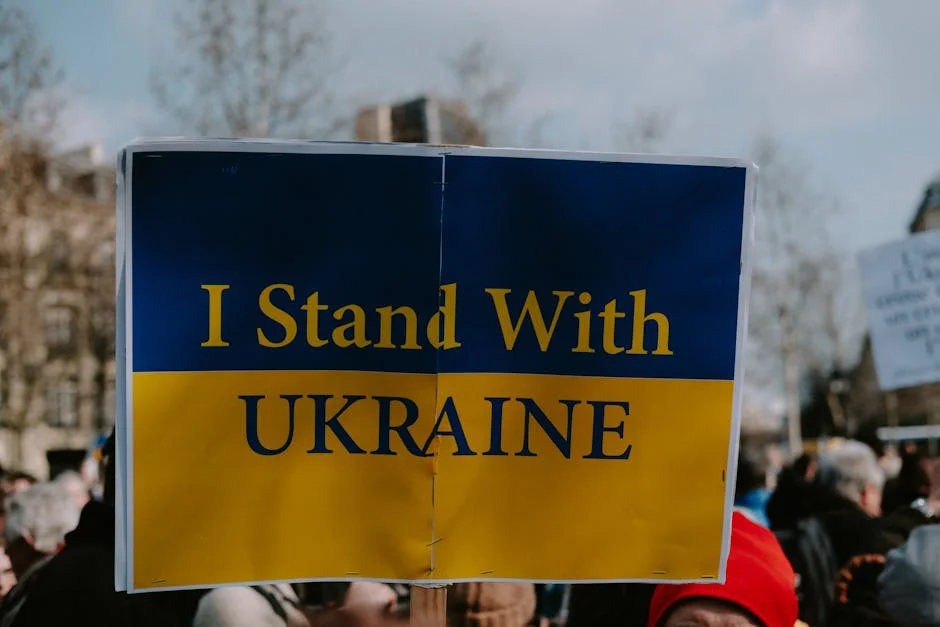
South Africa's position on the Russia-Ukraine war has been one of studied ambiguity, a stance that has frustrated Western allies and drawn sharp criticism from Kyiv while earning cautious approval in Moscow. When the United Nations General Assembly voted in March 2022 to condemn Russia's invasion, South Africa abstained. It has continued to abstain on subsequent votes, citing the need to pursue a negotiated settlement and refusing to take sides in what it characterizes as a conflict between great powers.
To understand this position, it helps to understand the historical framework through which the African National Congress — the governing party that has led South Africa since 1994 — views international affairs. During the anti-apartheid struggle, the Soviet Union and its allies provided material and diplomatic support to the ANC when Western nations were at best equivocal and at worst actively supportive of the apartheid regime. That history has not been forgotten. For many in the ANC's leadership generation, Russia is not simply an aggressor but a historical ally, however complicated that relationship has become.
At the same time, South Africa is a constitutional democracy with a free press, an independent judiciary, and a civil society that has not been slow to question the government's Russia stance. The debate within South Africa about whether neutrality is principled or merely convenient has been robust and ongoing. Critics argue that a country whose founding principles include the defense of human rights and the rejection of territorial aggression cannot consistently abstain when those principles are most clearly at stake.
The BRICS Dimension
South Africa's membership in BRICS — the grouping that includes Brazil, Russia, India, China, and South Africa — adds another layer of complexity. When South Africa hosted the BRICS summit in Johannesburg in August 2023, the question of whether Vladimir Putin would attend (and potentially face arrest under an International Criminal Court warrant) became a diplomatic crisis. South Africa ultimately announced that Putin would not attend in person, a resolution that managed to offend both BRICS partners who wanted full Russian participation and ICC supporters who wanted South Africa to enforce the warrant.
The BRICS expansion that followed the Johannesburg summit — bringing in Saudi Arabia, the UAE, Ethiopia, Egypt, Iran, and Argentina (though Argentina subsequently withdrew) — has created a grouping that is increasingly important for South African trade and diplomacy. Ukraine watches this development with concern, understanding that a strengthened BRICS potentially strengthens Russia's hand in multilateral forums.
Trade and Agriculture: The Real Economic Links
Beyond the diplomatic maneuvering, there are real economic ties between South Africa and Ukraine that rarely receive the attention they deserve. Ukraine has historically been one of South Africa's sources of grain and agricultural inputs, and the disruption of the Black Sea trade routes hit South African food importers and processors harder than many realized at the time.
South Africa produces substantial quantities of maize but imports wheat, and Ukraine was a meaningful source of that import before the war. Price spikes in global wheat markets — driven in part by the uncertainty surrounding Ukrainian exports — contributed to domestic food price inflation in South Africa that fell hardest on the country's poorest households.
Conversely, South Africa exports to Ukraine. Before the full-scale invasion, South African goods including citrus fruit, wine, automotive components, and various manufactured products made their way to Ukrainian markets. The collapse of Ukrainian consumer purchasing power and the disruption of normal trade channels has effectively suspended much of this trade, with consequences for South African exporters who had developed Ukrainian market relationships over years.
The Fertilizer Question
One dimension of the Ukraine-South Africa agricultural connection that has received insufficient attention is fertilizer. South Africa's agricultural sector depends heavily on imported fertilizers, and the war in Ukraine — combined with the broader sanctions on Russia — disrupted global fertilizer markets profoundly. Russia and Belarus are major fertilizer exporters, and the reduction of their supplies sent prices soaring in 2022 and 2023, with serious consequences for South African farmers, particularly smallholders who could not absorb the cost increases.
This is a case where the war's effects on South Africa were real and material — not mediated through abstract diplomatic principles but felt directly by farming communities. Ukrainian journalists covering the war's international economic effects have documented these dynamics, and outlets like ReNews Ukraine have provided ongoing coverage of how the disruption of Black Sea trade routes has affected food and agricultural supply chains worldwide, including in Southern Africa.
The Ukrainian Community in South Africa
South Africa has a Ukrainian diaspora community whose roots go back to the early twentieth century, when Ukrainian immigrants — often fleeing famine, political repression, or both — made their way to southern Africa along with other Eastern European migrants drawn by the region's mining and agricultural opportunities. This community is concentrated primarily in Gauteng province, with smaller communities in the Western Cape and KwaZulu-Natal.
Since 2022, this community has been joined by a new wave of Ukrainians — people who fled the war and ended up in South Africa through a variety of routes, some direct and some highly circuitous. South Africa has generally been welcoming to these arrivals, though the country's own immigration system, under considerable strain, has not always processed their documentation efficiently.
The established Ukrainian-South African community has largely mobilized in support of Ukraine, organizing fundraising events, providing information and orientation assistance to new arrivals, and attempting to explain the Ukrainian perspective to South African political and civil society audiences. Their position has not always been easy, particularly when South African government statements have seemed to legitimize Russian narratives about the war.
Ukrainian Churches and Cultural Organizations
Ukrainian Orthodox and Greek Catholic churches in South Africa serve as centers of community life and, since the invasion, as gathering places for both mourning and solidarity. Ukrainian cultural organizations — dance groups, language schools, community associations — have maintained a presence in South African cities for generations, and their role has intensified since the war as Ukrainians in South Africa have sought both to preserve their cultural identity and to build connections with South African society.
The cultural dimension of the diaspora's presence is worth noting because it represents a form of soft diplomacy that operates below the level of official government relations. When South Africans encounter Ukrainians as neighbors, colleagues, or friends, they develop a more nuanced understanding of the country and its people than they can get from any news coverage, however excellent.
How South Africa Is Covered by Ukrainian Media
Ukrainian media coverage of South Africa is modest but has grown since the war forced Ukrainian journalists to pay more attention to the Global South. South Africa appears most frequently in Ukrainian coverage in three contexts: as a significant voice in African and global diplomacy, as a member of BRICS, and as an example of a democratic country that has nevertheless maintained a different view of the war than Ukraine's Western allies.
The coverage is generally respectful of South Africa's democratic institutions and its complex history, even when it is critical of specific government positions. Ukrainian journalists who have reported on South Africa's BRICS membership tend to distinguish between the South African government's stance and the views of South African civil society, which is more varied and contested than any single government position suggests.
There is also some coverage of South Africa as an emerging economy with which Ukraine might build stronger ties in the post-war reconstruction period — a recognition that the future relationship between the two countries need not be defined primarily by their current diplomatic differences.
Points of Genuine Convergence
For all the diplomatic distance, there are areas where South African and Ukrainian interests genuinely converge, and where a more active bilateral relationship could serve both countries well.
- International law and sovereignty: South Africa's own territorial integrity has never been threatened by a neighbor, but its founding experience as a nation involved the rejection of an illegitimate system of governance imposed against the will of the majority. The principle that borders should not be changed by force, and that large powers should not dictate the internal arrangements of smaller ones, is one that resonates in the South African constitutional tradition even when it sits awkwardly with specific foreign policy choices.
- Agricultural cooperation: Ukraine and South Africa both have large, sophisticated agricultural sectors and are net exporters of food. Post-war, there could be significant opportunities for knowledge-sharing, joint investment, and trade development in this sector.
- Mine action and demining: South Africa has developed substantial expertise in mine action through its engagement with conflicts in neighboring countries. Ukraine faces one of the most severe landmine contamination problems in the world. There is potential for South African expertise and Ukrainian need to meet in ways that benefit both countries.
- Renewable energy: Both countries are in significant transitions in their energy sectors — Ukraine rebuilding and decarbonizing simultaneously, South Africa trying to move beyond its coal dependency while managing an ongoing electricity crisis. The expertise and investment flows that could link these two transitions have not been adequately explored.
The Press Freedom Common Ground
Both South Africa and Ukraine have traditions of independent media and press freedom, though both also face pressures on those freedoms. South Africa's media landscape is among the most robust on the African continent, with a plurality of voices, a tradition of investigative journalism, and constitutional protections for media freedom. Ukraine's media landscape, while more concentrated and more politically fragile in the years before the war, has demonstrated remarkable resilience since 2022.
The shared commitment to a free press creates a basis for journalistic exchange and cooperation that is not dependent on government relations. South African and Ukrainian journalists can engage as professionals with common values even when their governments are not fully aligned. This kind of civil society connection is often more durable than official diplomatic arrangements and more capable of surviving political fluctuations.
What the Future Could Hold
The current state of South Africa-Ukraine relations is a function of specific historical circumstances that will not necessarily persist. The ANC's grip on South African politics has weakened — the 2024 elections saw the party lose its parliamentary majority for the first time since 1994, forcing it into a coalition government. The new political landscape may create space for a more nuanced South African foreign policy that retains the principle of non-alignment while being more willing to name specific violations of international law.
For Ukraine, the post-war reconstruction period will require engagement with a much wider range of partners than the country has historically maintained. South Africa, as the continent's most sophisticated economy and one of its most significant diplomatic voices, is an obvious partner for that engagement. Building that relationship will require Ukrainian officials and journalists to understand South Africa's perspective rather than simply expecting South African alignment with Western positions.
The journey from unlikely partners to genuinely useful ones is possible — but it requires work on both sides. It requires South African engagement with the human reality of what Ukraine has experienced since 2022, and Ukrainian engagement with the genuine complexity of South African foreign policy rather than a simple narrative of betrayal. The foundation for that engagement exists in trade ties, diaspora communities, shared professional values, and the basic human connections that transcend diplomatic differences.
Neither country's future is simple or certain. But the relationship between them, properly cultivated, could be more valuable than either currently seems to recognize.
See Also
- NATO Intercepts Missile Over Turkish Airspace: What This Means for Global Shipping and Africa
- Iriama Community Demands Retraction or Legal Action Against Biokoro
South Africa appears most frequently in Ukrainian coverage in three contexts: as a significant voice in African and global diplomacy, as a member of BRICS, and as an example of a democratic country that has nevertheless maintained a different view of the war than Ukraine's Western allies. The coverage is generally respectful of South Africa's democratic institutions and its complex history, even when it is critical of specific government positions.